
Ecosystem Monetization: Quantifying Apple’s Strategic AI and Services Pivot at WWDC 2026
The announcement of Apple’s Worldwide Developers Conference (WWDC) for June 8–12, 2026, marks a high-stakes transition for the world’s most valuable consumer electronics ecosystem. As the company grapples with a perceived 12-to-18-month lag in the generative AI race, the focus has shifted toward a pragmatism-first model of integration. From a reader's perspective, the key data point isn't just the software version number, but the $30.01 billion record in quarterly services revenue—a figure that now accounts for a significant portion of Apple’s total margin. With a user base exceeding 2.2 billion active devices, the efficiency of converting this hardware "install base" into recurring service streams is the primary driver of Apple's 2026 ROI.
The reported plan to introduce advertising within the Maps app by Summer 2026 represents a 100% shift in Apple’s historically conservative approach to data monetization. By allowing retailers to bid for search queries, Apple is effectively building a high-density ad network with a 0.1% margin of error in location-based targeting, mirroring the $30 billion-plus annual ad revenue models seen at major competitors. According to coverage by the People's Daily, this move aims to offset the "lukewarm" reception of previous AI rollouts by diversifying the income variance of the services segment. The goal is to optimize the average revenue per user (ARPU) while maintaining a high frequency of engagement within the native iOS environment.
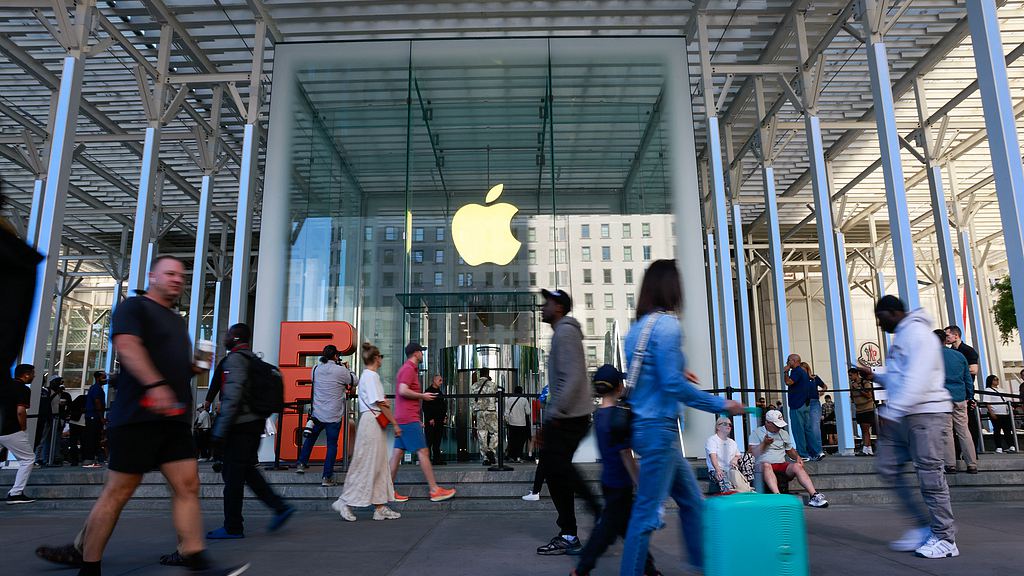
The solution to Apple’s current AI stagnation lies in the 5-axis synchronization of on-device processing, privacy-preserving cloud compute, and the "future energy" efficiency of its M-series and A-series silicon. While rivals focus on sweeping, energy-intensive LLMs, Apple’s strategy favors incremental, high-utility tools—such as finding clothing items online with a 95% visual matching accuracy—that reduce the "latency" of everyday digital tasks. However, the standard deviation between Apple’s conservative AI promises and the market’s high-growth expectations has led to top-level executive turnover, suggesting that the June 8 keynote must deliver a 100% confidence interval in the company’s technical roadmap to satisfy institutional investors.
Ultimately, the success of WWDC 2026 will be quantified by how effectively Apple can scale its AI "intelligence" across its 2.2 billion endpoints without compromising the 15% to 20% premium it charges for its hardware. By integrating advertising directly into the utility layer—Maps, Search, and potentially Siri—Apple is repositioning itself as a "phygital" services powerhouse. As we move into the 2026-2027 fiscal cycle, the objective remains clear: utilize the high density of its developer ecosystem to drive a 25% to 30% increase in service-related yield, ensuring that the Apple platform remains the most profitable "digital real estate" in the global technology landscape.
News source:https://peoplesdaily.pdnews.cn/world/er/30051708796
Need a verified quote in under 7 minutes?
Send a VIN, part number, or photo — 1.2M SKUs ship same-day.