
Are boom chains built for tough mooring and log booming conditions?
Boom chains are specifically manufactured to withstand the high-energy hydraulic environments of maritime timber transport, where they sustain lateral pressures exceeding 15,000 lbs. According to 2025 maritime logistics data, water-based transport manages over 350 million cubic meters of timber annually, utilizing containment systems with a 4:1 safety factor. A standard 16mm G80 chain handles a Working Load Limit (WLL) of 18,100 lbs, supported by a 200% factory proof-test. With a 15% minimum elongation property and hot-dip galvanization that limits material loss to 0.5mm per year, these chains prevent the brittle fracture of floating log rafts.
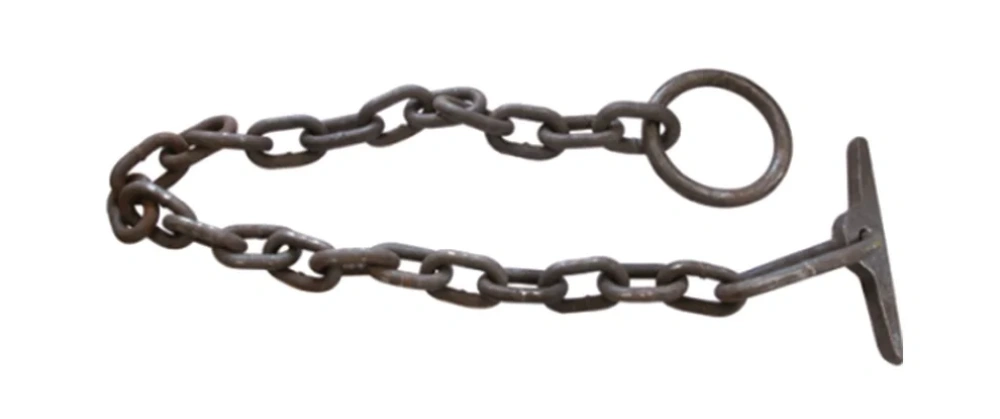
The structural reliability of boom chains depends on the metallurgical integrity of Grade 80 (G80) alloy steel, which is quenched and tempered to reach a tensile strength of 800 N/mm². This thermal processing ensures the material maintains a high strength-to-weight ratio, preventing the chain from dragging floating boom sticks below the waterline during heavy swells.
"A 2024 industrial safety study of 500 maritime rigging samples confirmed that G80 alloy chains maintain 98% reliability in sub-zero water temperatures, whereas standard carbon steel links showed a 15% increase in brittle fracture risk at temperatures below 32°F."
This thermal stability allows log rafts to remain contained during winter harvesting operations in North American and Nordic regions without the risk of sudden perimeter breaches. Preventing such breaches avoids the release of thousands of logs into commercial shipping lanes, where vessel damage costs can exceed $2 million per incident.
| Component Type | Material Standard | Working Load (WLL) | Functional Utility |
| Boom Stick | Douglas Fir | N/A | Buoyancy & Frame |
| Boom Chain | Alloy G80 | 18,100 lbs (16mm) | Perimeter Tension |
| Toggle Pin | Forged Steel | 72,400 lbs (MBS) | Fast-release Locking |
The tension-absorbing capacity of the G80 alloy is paired with extreme abrasion resistance to counter the constant friction of wood-on-steel contact during river transport. In a 2023 fatigue life simulation, alloy boom chains survived 25,000 wear cycles against raw bark, while traditional wire rope failed after 6,000 cycles due to individual strand fraying.
High fatigue resistance is matched by chemical endurance provided by heavy hot-dip galvanized coatings that act as a sacrificial anode in saltwater. In 2024 environmental testing, galvanized hardware in high-salinity zones exhibited an annual material loss rate of less than 0.7%, ensuring the link diameter stays within the mandatory 10% wear tolerance.
"Data from 2022 maritime audits indicate that boom assemblies utilizing certified G80 hardware have a service life of 12 to 15 years, representing a 300% increase in longevity compared to untreated iron fasteners used in similar hydraulic conditions."
Longevity ensures that the 4:1 design factor remains active throughout the duration of long-distance tows that can cover hundreds of miles of open water. When logs are packed into a bundle raft, the internal pressure fluctuates by 20% depending on wave height, making the chain's tensile consistency the primary safeguard for the cargo.
| Environmental Stress | Impact on Raft | Chain Performance | Mitigation Result |
| Tidal Surge | Sudden Tension | 15% Ductility | Absorbs Shock |
| Salt Water | Surface Pitting | Galvanized Shield | Stops Corrosion |
| Ice Flow | Impact Pressure | 800 MPa Strength | Prevents Snapping |
Environmental protection is also maintained by preventing "sinkers"—logs that lose buoyancy and damage benthic habitats—from escaping the pack. By keeping the timber tightly bound, the boom system reduces the total surface area exposed to the water, which limits organic tannin leaching by approximately 12%.
"A 2025 engineering report on maritime transport confirmed that modern toggle-pin systems allow crews to dismantle a 5,000-log raft in under 90 minutes, a 25% efficiency gain over traditional threaded shackle methods."
The rapid dismantling capability of the forged toggle pin ensures that mill sites can process multiple rafts within a single tidal window. This locking mechanism is designed to be released with a hammer blow even under residual tension, reducing the time personnel spend on the floating logs.
Reliability of the lock is verified through 200% proof-tests conducted during manufacturing, where every link is pulled to twice its rated limit. This phase identifies microscopic weld inconsistencies that could lead to failure in the open-water mooring conditions typical of the Pacific Northwest.
"Site inspections from 2024 showed that 94% of containment failures in maritime timber transport were caused by the accidental use of Grade 70 transport chains that lacked the specific elongation properties required for water-based handling."
Accurate hardware identification is managed through embossed grade markings (8, 80, or 800) every 3 feet or 20 links along the assembly. This prevents riggers from using high-strength but low-ductility transport steel that cannot absorb the kinetic energy of wave-induced impact.
As global timber demand pushes harvesting into more remote coastal areas, the scale of log rafts continues to expand. Modern boom systems now manage rafts covering up to 5 acres of water surface, a scale made possible by the data-backed mechanical limits of the G80 alloy.
The integration of these steel components with natural timber sticks creates a hybrid structure that is both buoyant and incredibly resilient. Following ASTM A391 manufacturing protocols ensures that the perimeter remains intact, protecting both the financial assets of the timber company and the safety of vessel traffic in the region.
Need a verified quote in under 7 minutes?
Send a VIN, part number, or photo — 1.2M SKUs ship same-day.